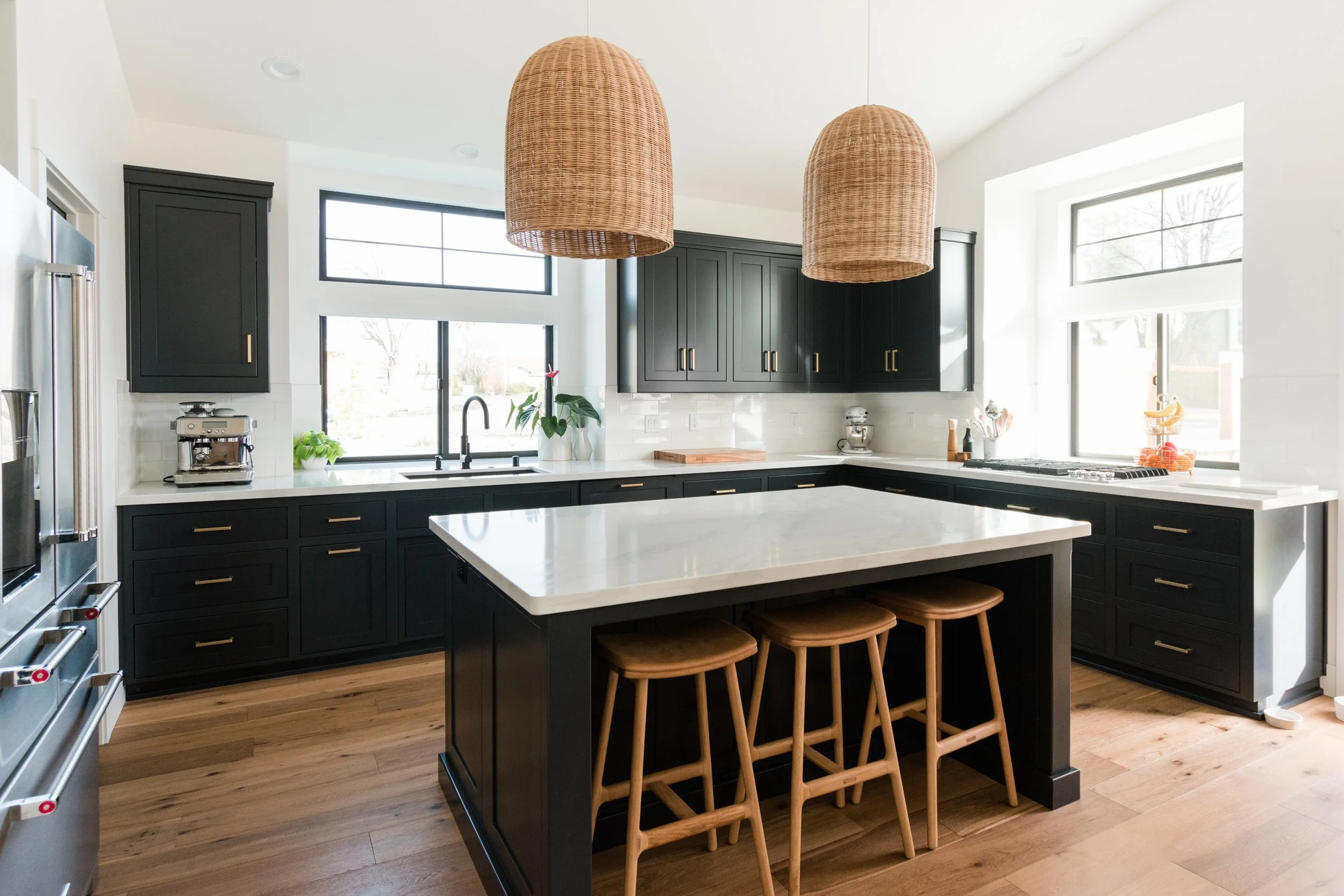
When planning a kitchen or bathroom remodel, most homeowners focus on countertop materials, colors, and finishes. But there's another detail that can make a big difference in the finished design: the countertop edge profile.
The edge profile is the shape and finish of the countertop's exposed edge. It might seem like a small detail, but it influences how your countertops look, how comfortable they are to use, and how well they complement your cabinetry and overall design.
A simple, straight edge can give a kitchen a clean, contemporary appearance, while a decorative ogee edge adds traditional character. Rounded edges offer a softer finish, and thicker laminated profiles can make a kitchen island or bathroom vanity stand out.
At Ceramic Designs by Ron Green in Redding, CA, your choice of countertop edge is included with every new countertop. We offer a variety of styles to complement different materials, design preferences, and everyday needs.
Here's a closer look at the options available and what to consider when choosing the right edge for your home.
Why Does Your Countertop Edge Matter?
Your countertop edge is one of the most visible finishing details in a kitchen or bathroom, especially along islands, peninsulas, and vanities.
Beyond appearance, the right edge profile can influence several aspects of your space.
Overall design: Straight edges tend to complement contemporary kitchens, while decorative curves work well with traditional cabinetry. Softer profiles can also help balance a room with lots of straight lines and angular features.
Everyday comfort: Countertop edges are surfaces we come into contact with regularly. Rounded or softened corners can feel more comfortable when leaning against a counter or working at a kitchen island.
Cleaning and maintenance: Smooth, simple profiles are generally easier to wipe down. More decorative edges have additional curves and details that may require a little more attention.
Visual thickness: Some edge treatments make a countertop appear thicker and more substantial. This can be especially appealing for large kitchen islands or custom bathroom vanities.
The best choice should complement your countertop material while fitting the way you use your space.
Single Edge Options: Clean, Classic, and Versatile
Single edge profiles are finished using the natural thickness of the countertop slab. They're popular because they offer a streamlined appearance without adding extra visual weight.
These styles work well in kitchens, bathrooms, laundry rooms, and other spaces where you want the countertop material to take center stage.
Flat Eased Edge
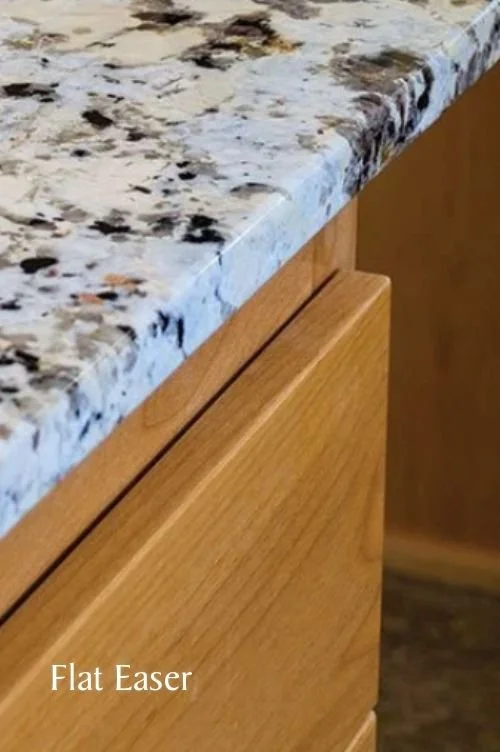
The flat eased edge is one of the most versatile countertop profiles. It features a straight, square appearance with slightly softened corners to eliminate the sharpness of a perfectly square edge.
Its simplicity makes it an excellent choice for contemporary, transitional, and even traditional kitchens.
Flat eased edges also allow the natural color and veining of materials like quartz, granite, and quartzite to remain the main focus.
Best for: Modern kitchens, minimalist designs, and homeowners who prefer clean lines.
Bevel Edge
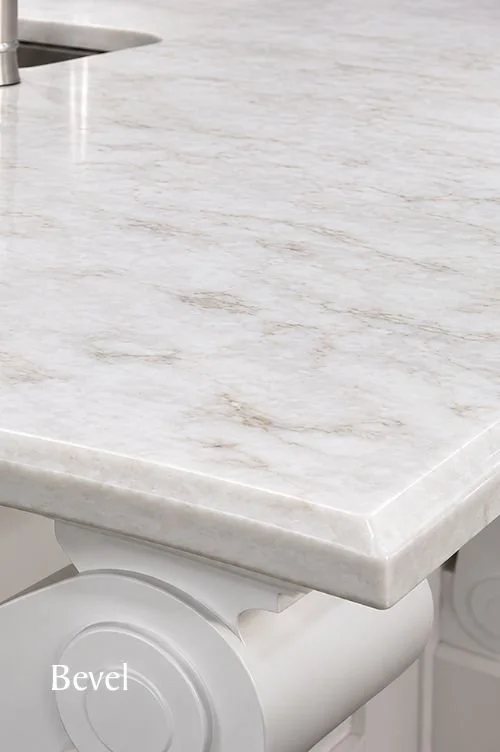
A bevel edge features an angled cut along the upper corner of the countertop. This creates a subtle decorative detail that catches the light and adds definition.
It's a great option for homeowners who want something more distinctive than a flat edge without choosing an ornate profile.
Beveled edges pair particularly well with transitional cabinetry and kitchens that incorporate both contemporary and traditional elements.
Best for: Transitional kitchens and understated architectural detail.
Demi Edge
The demi edge features a gently rounded upper portion with a flatter lower edge.
It softens the appearance of the countertop while maintaining a relatively structured profile. This balance makes it suitable for many different design styles.
A demi edge can be especially appealing on bathroom vanities and kitchen countertops where comfort and a polished finish are priorities.
Best for: Homeowners who want a softer edge without a fully rounded appearance.
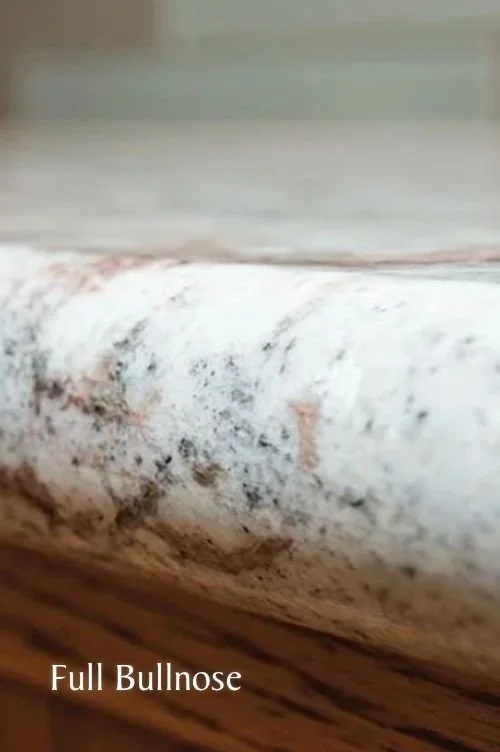
Bullnose Edge
A bullnose edge features a smooth, rounded profile that eliminates sharp corners.
Its soft shape makes it comfortable to the touch and relatively easy to clean. It's also a popular consideration for family kitchens and bathrooms where children may frequently come into contact with countertop edges.
Bullnose profiles work well with both contemporary and traditional cabinetry.
Best for: Family kitchens, bathrooms, and softer design styles.
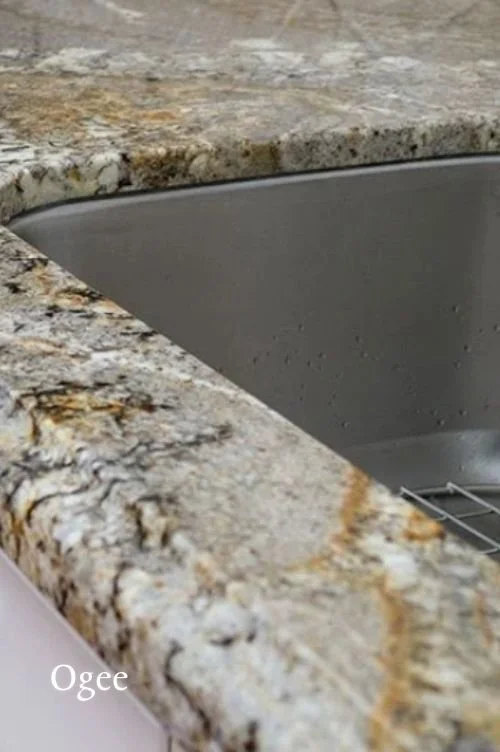
Ogee Edge
An ogee edge features a decorative S-shaped curve that creates a more traditional appearance.
This profile adds detail and dimension, making it especially attractive alongside raised-panel cabinetry, decorative molding, and classic kitchen finishes.
Ogee edges can also complement natural stone countertops by adding a more formal finishing detail.
Best for: Traditional kitchens, elegant bathrooms, and decorative cabinetry.
Standard Laminated Edges: Adding Thickness and Dimension
If you want your countertops to have a thicker, more substantial appearance, a laminated edge may be the right choice.
Laminated edges are created by attaching an additional strip of countertop material beneath the exposed edge. This gives the countertop the appearance of a thicker slab.
They're especially popular for kitchen islands, breakfast bars, and bathroom vanities where the countertop plays a prominent role in the overall design.
Ceramic Designs offers several standard laminated edge profiles.
Laminated Flat Eased Edge
This option combines the simplicity of a flat eased edge with the added visual thickness of lamination.
The result is a clean, substantial profile that looks particularly attractive on contemporary kitchen islands.
Best for: Modern kitchen islands and bold, streamlined countertops.
Typical Demi Edge
The typical demi laminated edge features a gently rounded upper corner and a thicker overall appearance.
It provides a classic finish without introducing excessive ornamentation.
Best for: Transitional kitchens and bathroom vanities.
Bookend Edge
The bookend edge features rounded upper and lower corners with a flatter surface between them.
This creates a balanced profile that looks finished from multiple angles, making it a good option for countertops with exposed ends or prominent edges.
Best for: Traditional and transitional designs that benefit from softer detailing.
Full Bullnose Edge
A full bullnose laminated edge creates a completely rounded profile across the thicker countertop edge.
Its smooth finish offers a soft appearance and eliminates sharp upper and lower corners.
This profile can be especially appealing in busy family spaces.
Best for: Family kitchens, bathrooms, and homeowners who prefer rounded finishes.
Laminated Demi Edge
The laminated demi edge provides a partial curve across a thicker countertop profile.
It offers a softer appearance than a flat eased edge while maintaining a tailored, structured look.
Best for: Kitchens and bathrooms that need a balance of softness and definition.
Premium Laminated Edges: Making a Statement
For homeowners looking for a more customized countertop appearance, premium laminated edges offer additional design possibilities.
These profiles emphasize thickness, architectural detail, and craftsmanship. They can make a countertop feel like a defining feature of the room rather than simply a functional surface.
Premium laminated edges are particularly well suited for large kitchen islands, custom vanities, and statement countertops.
Double Bevel Edge
The double bevel edge features angled cuts along both the upper and lower corners.
These clean, defined lines create an architectural appearance that works beautifully in contemporary and transitional kitchens.
Best for: Modern kitchens and homeowners who appreciate geometric detailing.
Single Bevel Edge
A single bevel edge uses one angled cut to add definition to a thicker countertop.
It's a simple detail, but the additional thickness gives it a bolder presence than a standard beveled edge.
Best for: Contemporary islands and streamlined kitchen designs.
Chisel Edge
The chisel edge has a textured, hand-hewn appearance that highlights the natural character of stone.
Rather than creating a perfectly smooth, polished edge, this profile introduces a more organic, rugged finish.
It can be particularly attractive in rustic kitchens, mountain homes, and spaces featuring natural wood, stone, and other textured materials.
Best for: Rustic, farmhouse, and nature-inspired designs.
Premium Ogee Edge
The premium ogee edge takes the traditional S-shaped curve and incorporates it into a thicker laminated profile.
The additional depth emphasizes the decorative shape, creating a rich, classic appearance.
It works especially well with detailed cabinetry and traditional kitchen or bathroom designs.
Best for: Traditional kitchens, custom vanities, and elegant stone countertops.
Quirke Mitre Edge
A quirke mitre edge uses precisely joined pieces of countertop material to create the appearance of a thick, solid slab.
The result is a sleek, substantial edge that can make a kitchen island look especially impressive.
This profile is often chosen for contemporary kitchens where clean lines and dramatic countertop thickness are important design elements.
Best for: Statement kitchen islands, contemporary designs, and thick countertop appearances.
How to Choose the Right Countertop Edge for Your Home
With so many profiles available, choosing an edge can feel overwhelming. The good news is that a few practical considerations can help narrow down your options.
1. Consider Your Kitchen or Bathroom Style
Start by looking at your cabinetry, hardware, backsplash, and overall design.
For contemporary kitchens, flat eased, beveled, and quirke mitre edges offer clean lines that complement streamlined cabinetry.
Traditional kitchens often pair beautifully with ogee, bullnose, and bookend profiles.
If your home has rustic or farmhouse influences, a chisel edge can complement natural textures and materials.
You don't have to match every detail perfectly, but your countertop edge should feel consistent with the rest of the room.
2. Think About How You Use Your Countertops
A kitchen island where family members gather every day may benefit from a different edge profile than a decorative bathroom vanity.
For busy households, softer profiles such as bullnose, full bullnose, and demi edges can be more comfortable during everyday use.
While rounded edges cannot eliminate the risk of injury, they avoid the sharper corners found on more angular profiles.
3. Consider Cleaning and Maintenance
If easy cleaning is a priority, simpler profiles are generally the most practical.
Flat eased, demi, and bullnose edges have smooth surfaces that are easy to wipe down.
Decorative profiles such as ogee have additional curves where dust or residue may collect, requiring a little more attention.
4. Match the Edge to Your Countertop Material
The material you choose can influence which edge profiles are appropriate.
Granite, quartz, marble, quartzite, and porcelain each have different fabrication characteristics. Some profiles work particularly well with certain slab thicknesses and materials, while others may require specialized fabrication.
For example, a simple flat eased edge can showcase the natural veining of Taj Mahal Quartzite, while a thicker laminated profile can create a dramatic appearance on a kitchen island.
Our team can help determine which profiles are suitable for your selected material and desired finish.
5. Decide How Much Visual Thickness You Want
Countertop thickness can significantly influence the overall look of a kitchen or bathroom.
A single edge profile offers a lighter, more streamlined appearance. This can work beautifully in smaller spaces or kitchens with simple cabinetry.
Laminated edges create the appearance of greater thickness, which can help a large island or custom vanity feel more substantial.
If you're looking for a statement countertop, premium laminated options are worth considering.
Should Your Kitchen Island Have a Different Edge Profile?
One question homeowners sometimes have is whether the kitchen island should feature the same edge as the surrounding countertops.
It doesn't necessarily have to.
Using a thicker laminated edge on an island while keeping a simpler edge on perimeter countertops can create visual interest without introducing another countertop material or color.
For example, a kitchen might feature flat eased edges along the perimeter and a thicker laminated flat eased or quirke mitre edge on the island.
This approach can give the island more presence while maintaining a cohesive overall design.
The key is making sure the profiles complement each other and the surrounding cabinetry.
See Countertop Edge Options at Ceramic Designs in Redding
Choosing the right countertop edge is easier when you can compare the different shapes and finishes.
At Ceramic Designs by Ron Green, we help homeowners throughout Redding and the surrounding North State select countertop materials, finishes, and edge profiles that work together.
Your choice of edge is included with every new countertop, and our team can help you understand the available options based on your material and design preferences.
You can start by browsing photos of our Countertop Edge Options, then visit our showroom to see the details up close.
Whether you're updating a bathroom vanity, replacing kitchen countertops, or planning a complete remodel, we're here to help you make confident decisions about the details that bring your project together.